Your Home by the Harbour
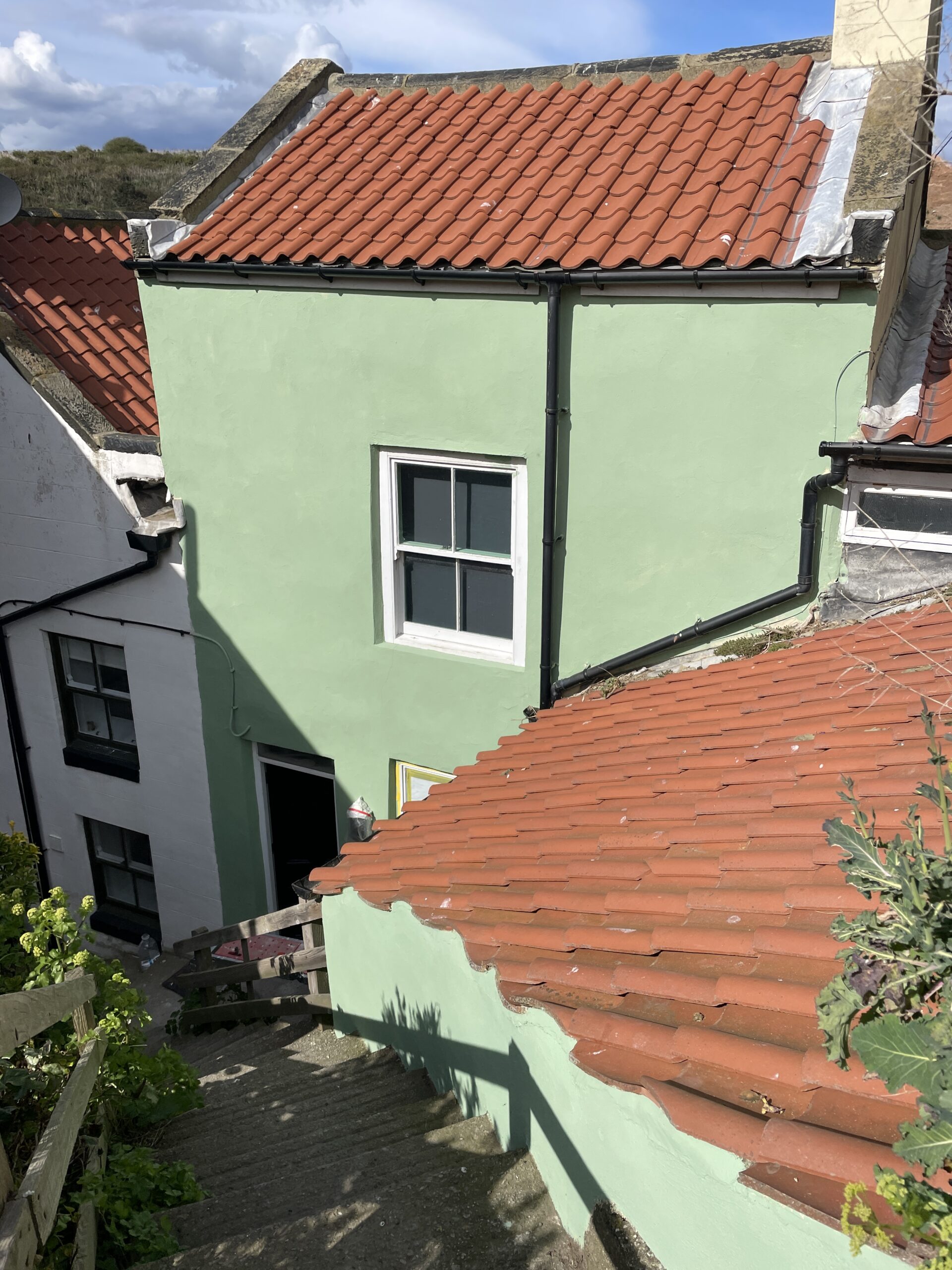
Tucked into a winding lane in the fishing village of Staithes, Heart Stone Cottage is where original beams, a crackling fireplace, and a plush corner sofa meet everything you need for a relaxed coastal break. Wake to sea air drifting through the kitchen window, spend evenings by the fire with a glass of wine, and fall asleep in a room dressed in soft linens and warm, heritage tones.
Staithes itself has been a working fishing harbour for centuries and once drew a colony of artists captivated by its light and its narrow, sea-worn streets. Today it’s a quieter place to walk the cliffs, hunt for fossils, or wander down to the harbour for fish and chips, with the cottage as your cosy base to come home to.
Ready to see it for yourself? Book Your Stay
Where the name came from
Heart Stone. Because it sits in the heart of Staithes.
That is the whole story. We are not going to pretend it is cleverer than that.
We took it back to brick
Andrea bought it with her son Shayne.
It was the first place the two of them had done up together.
They stripped it back to brick and started again — keeping the beams, the fireplace and the bones of an old fisherman’s cottage, and putting right everything that needed putting right.
It took what it took.
Who you are actually dealing with
Andrea — or Shayne, if she’s away. That is it.
There is no management company and no call centre.
Message them about dates, dogs, the bank, where to park, or what to do if it rains for three days straight.
They would honestly rather you asked before you booked than found out after.
Have a look round the cottage · Coming with dogs · Walking the Cleveland Way · Check dates and book direct
1. Fishing and Maritime Heritage
- Origins: Staithes dates back to at least the medieval period, but grew significantly in the 18th and 19th centuries as a thriving fishing port, particularly for herring and lobster.
- Cod and Herring Boom: At its peak, hundreds of fishermen worked from Staithes, and the village was bustling with life centred around the sea.
- Staithes Lifeboat: The Royal National Lifeboat Institution (RNLI) had a station here due to the treacherous coast, reflecting the dangers local fishermen faced.
2. The Staithes Group (Art Colony)
- In the late 19th and early 20th centuries, Staithes became a hub for artists, known as the Staithes Group or Staithes School.
- Inspired by French Impressionism, about 30 artists—such as Laura Knight and Harold Knight—lived and worked in the village, drawn by its rugged charm and natural light.
3. Captain Cook Connection
- The famous explorer Captain James Cook was apprenticed as a grocer’s boy in Staithes around 1745 before moving to Whitby, where he began his maritime career.
- A heritage centre in the village commemorates his early life and the area’s seafaring past.
4. Geology and Fossils
- The cliffs surrounding Staithes are rich in Jurassic fossils, making it a significant site for geologists and fossil hunters.
- The area is part of the Cleveland Ironstone Formation, and there was also ironstone mining activity in the 19th century.
5. Modern Day
- While commercial fishing has declined, Staithes remains a picturesque and culturally rich destination.
- It is part of the North York Moors National Park and the Cleveland Way, attracting walkers, artists, and holidaymakers.